GEO in China: 5 AI Crawling Logics You Must Know

Generative Engine Optimization (GEO) is reshaping digital visibility in China. As AI-driven search engines replace traditional keyword-based ranking, brands need to adapt their strategies. Knowing the unique crawling logic of each major AI platform is essential to ensure your content gets discovered, trusted, and recommended.

Below we outline the five leading AI platforms in China, their crawling preferences, and practical GEO strategies to optimize your content.

1. Baidu Wenxin Yiyan: Authority-Driven Crawling

  • Content Preference: Authoritative, official, standardized knowledge.

  • Key Sources: Baidu Baike, Baijiahao, government websites, top news portals.

  • GEO Strategy:

    • Build and maintain Baidu Baike entries with backlinks to in-depth website articles or whitepapers.

    • Publish analysis on Baijiahao with clear policy- or standard-focused titles.

    • Implement JSON-LD structured data across product and article pages.

    • Emphasize compliance with standards directly in your content.


2. ByteDance Doubao: Visual Experience Crawling

  • Content Preference: Short videos, practical tips, lifestyle insights.

  • Key Sources: Douyin, Toutiao, ByteDance KOL ecosystem.

  • GEO Strategy:

    • Always upload SRT subtitle files with natural keyword integration.

    • Optimize video covers with direct problem-solving hooks.

    • Split long reports into short-form video series.

    • Cross-post text articles with video links on Toutiao.


3. Tencent Yuanbao: WeChat-Centric Crawling

  • Content Preference: Professional insights and authoritative voices inside WeChat.

  • Key Sources: WeChat Official Accounts, Channels, Mini Programs, Zhihu.

  • GEO Strategy:

    • Use WeChat Open Tags to signal professional and authoritative content.

    • Publish expert-led compliance and industry analysis articles.

    • Reference national standards in Zhihu answers.

    • Collaborate with recognized WeChat experts to build trust.


4. DeepSeek: Tech and Data-Driven Crawling

  • Content Preference: Academic research, technical documents, structured data.

  • Key Sources: GitHub, technical forums, academic publications.

  • GEO Strategy:

    • Host product documentation and APIs in Markdown on GitHub.

    • Include clean, referenced code blocks.

    • Share Q&A content on CSDN or Zhihu linking back to your docs.

    • Support claims with DOI or authoritative references.


5. Kimi: Long-Form Structured Content Crawling

  • Content Preference: Detailed, structured guides and information-dense documents.

  • Key Sources: Xiaohongshu, Douban, PDFs, Word uploads.

  • GEO Strategy:

    • Create content with clear multi-level headings (H1 > H2 > H3).

    • Turn manuals and evaluations into long-form checklists or guides.

    • Keep content concise but data-driven.

    • Use listicle-style formats for clarity and higher parsing accuracy.


Final Thoughts

GEO in China is not a one-size-fits-all strategy. Baidu prioritizes authority. ByteDance rewards visual-first storytelling. Tencent favors its closed ecosystem. DeepSeek looks for technical precision. Kimi values long-form structured analysis.

By tailoring your content to each platform’s crawling logic, you maximize your brand’s discoverability and credibility. GEO is no longer an optional tactic—it is the foundation of winning visibility in the age of AI-driven search.

Want to future-proof your brand’s presence in China? Contact us today to design a GEO strategy tailored to your business.

From SEO to GEO: Why Brands Are Optimizing for AI

As artificial intelligence tools become part of daily digital life, one clear trend is emerging in China’s digital marketing landscape: the shift from SEO (search engine optimization) to GEO (generative engine optimization).

This pivot comes as AI chatbots increasingly influence how users discover brands, products, and services. Instead of searching on Baidu or Google, users now ask AI tools directly—and AI recommendations are shaping consumer decisions in real time.

What is GEO?

GEO, or generative engine optimization, refers to the practice of crafting digital content that is more likely to be selected and quoted by AI chatbots in their responses. Rather than simply optimizing for keywords and backlinks, GEO content is structured for AI understanding, credibility, and context.

This means:

  • Including data-backed insights

  • Referencing real-world use cases

  • Clearly explaining product categories or market positioning

  • Publishing on trusted third-party platforms, not just official brand channels

Why This Matters for Brand Visibility

When AI assistants make product or service recommendations, they are perceived as neutral and authoritative. If a chatbot suggests a brand, it’s often taken as a soft endorsement—especially if the user screenshots the result and shares it on social media platforms like Xiaohongshu.

With AI-powered discovery gaining traction, brands not showing up in these responses risk losing organic visibility to more AI-optimized competitors.

AI Changes the Content Game

In the traditional model, content was created for people and optimized for search engine crawlers. Today, it’s increasingly about content for AI first—ensuring that generative models can interpret and trust the material.

Unlike search engines that often highlight official brand sites, AI bots pull from a wider mix of sources, including:

  • Blogs

  • Wikis or knowledge bases

  • Mapping and directory services

  • Social content or review-based platforms

What Makes Content AI-Friendly?

Marketers are beginning to adapt to this shift. GEO-friendly content usually follows a few best practices:

  • Informative and structured: Avoid fluffy marketing language; instead, offer factual descriptions and practical value.

  • Published externally: Content hosted on third-party platforms is more likely to be cited.

  • Localized for Chinese AI platforms: Content in Simplified Chinese, hosted in China, or on locally recognized domains has greater traction.

  • Rich in context: Clarify the industry, use case, and value proposition in detail.

Why Brands Are Making the Switch

Traffic from traditional search engines is steadily declining. Platforms like Douyin, Xiaohongshu, and WeChat Channels have captured consumer attention, and now AI chat tools are taking it a step further, acting as personalized content curators.

Some companies are even rethinking their entire marketing stack after seeing competitors showcased in AI responses. This has prompted a new wave of investment into content strategies focused on AI discoverability rather than keyword density alone.

SEO Isn’t Dead—But It’s Not Enough

To be clear, search engines still play a role. For example, half of one major Chinese search engine’s quarterly revenue still comes from online marketing. But user behavior is shifting fast, and marketing teams are seeing up to five times more demand for GEO services than SEO in certain sectors.

Forward-thinking brands are already working on:

  • Updating blog formats to include structured takeaways

  • Creating educational resources that feel “AI quotable”

  • Publishing to content hubs beyond their own sites

Final Thoughts

As AI becomes a trusted advisor in consumer decision-making, brands must move beyond old SEO rules and think AI-first.

GEO isn’t just a buzzword—it’s a new way of ensuring your brand gets discovered, cited, and trusted in the age of generative AI.

Need Help with GEO in China?
Our team can help you transform your content strategy for the AI era—across blogs, product pages, and third-party platforms. Contact us to get started.

Baidu vs Google: 8 Key SEO Differences You Must Know

When it comes to search engine optimization, most global marketers are well-versed in Google’s algorithm and best practices. But if you’re targeting the Chinese market, Baidu—the country’s leading search engine—requires a different approach altogether.

In this article, we break down 8 critical differences between Baidu and Google SEO to help you build a localized strategy that actually works.

1. Algorithm Structure: Keywords Still Matter on Baidu

While Google has moved away from meta keyword tags and flat structures, Baidu still uses them as ranking signals. Flat website architecture, accurate meta tags, and keyword density remain important for Baidu rankings. Brands entering China should revisit some “old-school” SEO tactics to align with local requirements.

2. ICP License: A Must for Serious Rankings

An ICP (Internet Content Provider) license is a major trust and compliance signal for Baidu. It’s issued by the Chinese government and is required for hosting a website in Mainland China. Without it, your visibility will be limited—even if your content is well-optimized. Most foreign brands work through a local partner to obtain this license or opt for a .cn domain hosted via a Chinese CDN.

3. Ad Platform Limitations: More Friction Than Google

Launching Baidu ads comes with more barriers than Google Ads. You’ll need to provide additional documentation, undergo account verification, and adapt to fewer ad format options. Campaign approval also tends to take longer. If you plan to invest in SEM, budget extra time for setup and approvals.

4. Different Payment Models: Upfront vs. Post-Billing

Unlike Google, which allows post-campaign billing and flexible budgets, Baidu operates on a prepaid model. Brands must pay an initial deposit and verification fee to activate their ad account. There’s also a minimum threshold for ad spend. If you’re entering the market for the first time, plan for this upfront investment.

5. Chinese Content is King

Baidu strongly favors Simplified Chinese content. Sites written in other languages—even Traditional Chinese—will rank lower. In addition to language, local hosting or Chinese CDN support improves page speed and indexing. Simply put: the more localized your content and infrastructure, the better your results.

6. Social SEO: Zhihu, Douban & Tieba Matter

Unlike Google, Baidu’s ecosystem incorporates results from Chinese forums and social platforms. Activity and keyword-rich discussions on Zhihu, Douban, and Baidu Tieba directly influence rankings. This means a hybrid content strategy—blending on-site SEO and off-site social content—is critical for success.

7. Mobile Optimization: Non-Negotiable

With over 65% of users accessing Baidu via mobile, speed and responsiveness are essential. Baidu prefers fast-loading AMP-like mobile pages and rewards sites that are optimized for China’s top mobile devices and browsers. Don’t expect your desktop-optimized Western site to perform well in this environment.

8. Local Backlinks Carry More Weight

Backlinks still play a big role in Baidu SEO—but with a twist. Baidu gives higher weight to inbound links from Chinese domains and strongly favors exact-match anchor text. Building a local backlink network via media outreach, directory submissions, and Chinese forums can significantly boost your search visibility.

Final Thoughts

A high-performing SEO strategy in China isn’t a simple translation of your Google playbook. It requires localization, compliance, and a firm grasp of Baidu’s ranking factors. By understanding and adapting to these key differences, your brand can gain meaningful visibility and connect with Chinese consumers in a truly relevant way.

Need Help Navigating Baidu SEO? Our team specializes in building effective search and content strategies for the China market. Get in touch to explore how we can support your next campaign.

Maximizing B2B SEO in China: The Strategic Role of Baidu Baike

When it comes to B2B digital marketing in China, most brands focus on platforms like WeChat. However, many overlook a powerful yet cost-effective asset that can significantly boost brand visibility, credibility, and SEO performanceBaidu Baike (百度百科).

What Is Baidu Baike?

Baidu Baike is China’s equivalent of Wikipedia, but it’s more than just an online encyclopedia. With nearly 300 million monthly homepage views and even more traffic from Baidu Search, Baidu Baike plays a crucial role in shaping brand perception and supporting search-driven research in China.

For B2B marketers, a well-maintained Baike page serves as an authoritative digital asset, offering Chinese professionals a credible first touchpoint when researching potential partners, vendors, or service providers.

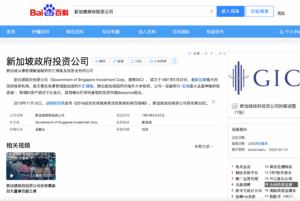
Screenshot of the Baidu Baike page for GIC, the Government of Singapore Investment Corporation, showing company introduction, details, and related video.

GIC’s official Baidu Baike page serves as a strong example of how foreign organizations can build credibility and improve search visibility in China.

Why Baidu Baike Matters for B2B Marketing

  • Search Visibility: Baidu Baike entries rank highly on Baidu, improving your organic SEO performance.

  • Credibility Boost: A professional Baike page adds legitimacy and positions your brand as a trusted source of information.

  • Lead Generation Support: It helps prospective clients or partners validate your business before making contact.

  • Content Ecosystem Integration: Baidu Baike links seamlessly with other Baidu properties like Zhidao, Baijiahao, and Tieba.

How to Create a Baidu Baike Entry in 2025

  1. Register a Baidu Account

    • Required for submission. You’ll need a verified Baidu account, typically with a Chinese phone number.

  2. Check for Existing Entries

    • Search your brand in Baike to ensure no duplicate entries exist.

  3. Draft a Structured Entry

    • Include your company’s history, services, milestones, and leadership details in simplified Chinese.

  4. Cite Reliable Sources

    • Reference Chinese-language news outlets, government publications, or academic sources to validate your content.

  5. Submit for Review

    • Baidu’s editorial team will review and approve your entry before publishing.

5 Proven Strategies to Maximize Baidu Baike’s Value

1. Create a Structured, Professional Entry

Write your page like a Wikipedia article with a clean layout, well-defined sections, and neutral language.

2. Optimize for Baidu Search

Use industry-relevant keywords, highlight your Chinese brand name, and include internal Baike links to related concepts or categories.

3. Leverage Baidu’s Content Ecosystem

Link your Baike page in:

  • Zhidao Q&As

  • Baijiahao articles

  • Tieba forums

  • SEM ads and Baidu Brand Zone

4. Keep Your Entry Updated

Regularly refresh your page with new milestones, product launches, and verified information to maintain credibility.

5. Use Third-Party Mentions as References

Leverage mentions by KOLs, journalists, or platforms like Zhihu as credible references to strengthen your Baike content.

Final Thoughts

As search-driven research continues to dominate B2B buyer behavior in China, Baidu Baike remains one of the most underrated digital assets for foreign brands. Investing in a credible, well-optimized Baike page can help your brand build trust, visibility, and lead generation potential in the world’s largest online market.

Need help with Baidu Baike or your B2B China marketing strategy? Contact us today to learn more.

SEO for Foreign Brands: Optimizing Search Engine Results Pages

In the digital landscape, optimizing search engine results pages (SERPs) is pivotal for foreign brands looking to establish a strong online presence in China. Navigating the intricacies of search engine optimization (SEO) can be a daunting task, especially in a market as distinct as China’s. Let’s dive in to explore fundamental techniques for foreign brands to enhance their SEO strategies for better visibility on search engines like Baidu.

To begin with, it’s crucial to familiarize yourself with the most popular search engines in China, as Google doesn’t operate there. For starters, this understanding lays the groundwork for tailoring your SEO efforts effectively to the Chinese market.

💻 Top Search Engines in China and How They Work

Identifying and Targeting Relevant Keywords

An effective SEO strategy begins with the crucial step of identifying the most relevant keywords for your brand and content. This process involves understanding what terms and phrases your target audience in China is likely to use in their searches. To achieve this, consider the following steps:

Keyword Research: Start with comprehensive keyword research. Tools like Baidu Keyword Planner can provide valuable insights into the popularity and competitiveness of keywords.

Competitor Analysis: Analyse the keywords your competitors are targeting. This can offer a useful reference point and reveal gaps in your own strategy.

Long-Tail Keywords: Consider long-tail keywords, which are more specific and have less competition. They can help you target niche audiences effectively.

Localisation: Localise your keywords to cater to the Chinese audience. Understand that certain keywords may have regional variations in their usage.


Search Engine-Friendly Websites

Ensuring your website is search engine-friendly is the foundation of a strong SEO strategy. Here are key aspects to focus on:

Mobile Optimization: In China, a significant portion of internet users access the web via mobile devices. Ensure your website is responsive and loads efficiently on mobile platforms.

Page Load Speed: Page load speed is a critical ranking factor. Compress images, reduce unnecessary scripts, and enable browser caching to improve load times.

Chinese Hosting: Hosting your website in China can significantly improve loading speeds. Local hosting minimises latency and enhances the user experience.

Chinese Domain: Consider registering a Chinese domain (ending with .cn) to signal to Baidu and users that your content is relevant to China. Baidu prioritizes indexing websites that have ICP. Those who don’t would find it very hard or even impossible for Baidu to index its contents. You can check what exactly ICP is in our previous post.


Tracking SEO Performance and Making Adjustments

SEO is not a static process; it requires continuous monitoring and adaptation. Regularly track your SEO performance to identify areas for improvement. Here’s how to do it effectively:

Analytics Tools: Implement analytics tools like Baidu Analytics or Google Analytics to monitor website traffic, user behaviour, and conversion rates.

Keyword Ranking: Keep a close eye on your keyword rankings. Identify keywords that are performing well and those that may need adjustment.

Content Audit: Regularly audit your content to ensure it remains relevant and valuable. Remove outdated content and update existing pages to align with current trends and user intent.

Backlink Analysis: Monitor your backlink profile and disavow low-quality or spammy backlinks that can negatively impact your SEO.


Additional Resources and Expertise

To delve deeper into the world of Baidu SEO, consider leveraging resources from reputable sources and collaborating with experts in the field. Here are some additional tips:

Educational Material: Explore educational material on Baidu SEO, such as blogs, articles, and guides. 

Online Courses: There are online courses and certifications available that can enhance your understanding of SEO practices in China.

SEO Agencies: Collaborating with local SEO agencies in China can provide you with the expertise required to navigate the intricacies of Baidu and its algorithms.

Stay Updated: SEO is an ever-evolving field. Stay updated with the latest trends, algorithm changes, and best practices to maintain a competitive edge.


Less obvious facts that SEO optimisation is easily overlooked

Geographic positioning: Firstly, determine the user’s geographical location based on their IP address and return search results that are more suitable for the user’s geographical location.

Above The Fold: Secondly, place the most important information on the first screen and capture the user’s attention within a few seconds.

Social media optimisation: Lastly, publish high-quality content on mainstream media platforms, encouraging users to actively engage with the contents


Main Differences between Baidu and Google

While Baidu places greater emphasis on the quantity and quality of links, Google, on the other hand, focuses more on the content relevance and website quality of external links. Baidu places a higher emphasis on the quantity and quality of external links because it believes that these factors are crucial indicators of a website’s authority and credibility.

In contrast, Google prioritizes the content relevance of external links and the overall quality of link sources. This distinction arises from Google’s algorithms, which can adeptly identify content relevance and link quality.

Google’s attention is directed towards factors such as the content’s relevance to the linked page and the overall quality of the source website, including considerations such as website credibility, page quality, and traffic. As a result, Google assigns higher weight to the external links originating from high-quality websites.

🔍 Check out our introduction to Baidu SEO for Beginners

Baidu Index 

Then, there is also the Baidu Index. Baidu Index is a tool provided by Baidu, the leading Chinese search engine. It allows users to track and analyze the popularity and trends of search queries on the Baidu platform. It is similar to Google Trends but specific to Baidu’s search data.

Furthermore, Baidu Index provides a platform for users to input keywords or phrases, allowing them to observe how the search volume for those terms has changed over time. This information is not only valuable but essential for businesses, marketers, and researchers. Additionally, it aids in understanding the interest and popularity of certain topics in the Chinese market, offering insights that can shape strategic decisions.

The tool provides a wealth of data, encompassing the number of searches, regional interest, related queries, and other relevant information. This multifaceted information proves instrumental for various purposes, ranging from market research and content planning to gauging the effectiveness of online campaigns within the dynamic landscape of the Chinese internet.

Moreover, it’s essential to note that access to Baidu Index is contingent upon having a Baidu account. Additionally, the tool not only facilitates a holistic understanding of user behavior but also uniquely tailors its features to primarily focus on Chinese language search queries. This linguistic emphasis underscores the significance of cultural and linguistic nuances when delving into the intricacies of the Chinese online ecosystem.
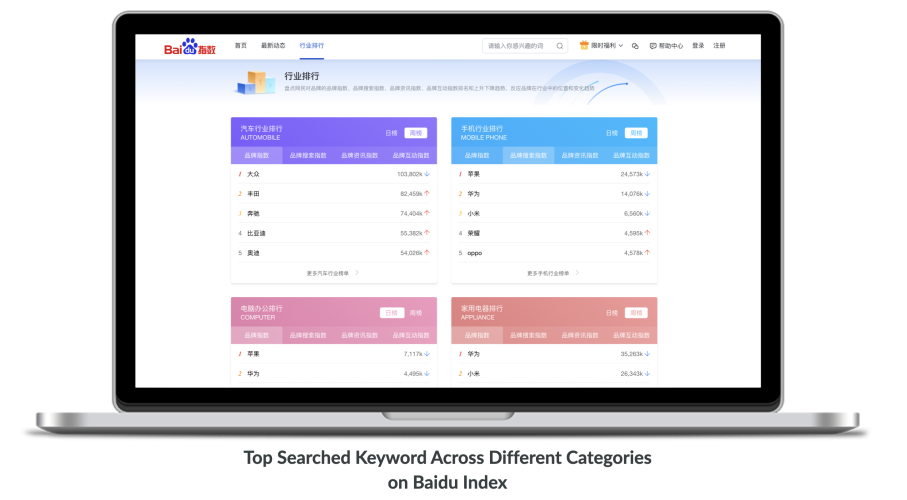
Baidu Index


Conclusions

In conclusion, optimizing SERPs for foreign brands in China emerges as an essential aspect of digital marketing. It is imperative to identify and target relevant keywords to ensure your website is search engine-friendly.

Moreover, continuously tracking SEO performance becomes a crucial practice. This approach enables you to significantly enhance your online visibility and effectively connect with the Chinese audience.

It’s crucial to remember that SEO is a long-term investment. Patience and persistence are key to achieving lasting results. As you embark on your SEO journey in China, consider it an ongoing process of improvement and adaptation. The digital landscape evolves, and so should your SEO strategy. Stay proactive in adjusting your approach to align with the dynamic nature of online trends and search engine algorithms.

You might want to explore our article on WeChat Search for further reading.

For further information, please feel free to contact us at contact@thewechatagency.com to learn more.

Top Search Engines in China and How They Work

If you want to implement an effective marketing strategy in China, you must get acquainted with the largest search engines in the country. 

As of 2021, China had 1 billion internet users, making it the largest online market in the world. But because of the filters imposed by the Great Firewall of China, a number of well-known search engines, including Google, are not accessible in China.  

If Google is not working in China, then what are Chinese people using? Let’s examine the popular Chinese search engines and how they work.

Popular search engines in China


Baidu

The most popular search engine in China is Baidu, and it is comparable to Google in the West. It was among the first search engines to appear in China, and since then, its use has grown significantly.

It dominates the market for search engines in the PRC by more than 75% and even draws some users from abroad, like the United States and Japan.

Baidu only indexes websites using simplified Chinese characters. Therefore, if you don’t have a website in Mandarin, your website won’t appear. Additionally, it favors websites that are stored on Chinese servers.

An Internet Content Provider License is required in order to host a website in China. Let’s learn about the ICP in a later part of the blog. Keep reading!  

Also, if you want to know about it in detail, check this blog: Baidu SEO for beginners.


Sogou

Sogou, the second player in China, has been operating since 2004. They managed to gain 24.54% of the market in December 2020, outpacing all other Chinese search engines in terms of growth.

Sogou’s algorithm is unique. As a result, don’t anticipate Baidu SEO strategies to be effective on this search engine.  Sogou’s search algorithm highly values original content and site authority. The importance of backlinks as a ranking factor seems to lean more toward quantity than quality. 

Due to its more affordable pay-per-click campaigns, Sogou has proven to be very helpful for businesses that aim to market to consumers in lower socioeconomic areas.

With Tencent’s acquisition of Sogou, the Chinese search engine now has a special feature that no other search engine in the country can claim: the ability to search on the WeChat platform. The QQ browser, created by Tencent, also uses Sogou as its default search engine. 


Haosou

Haosuo, also known as Qihoo 360 Search and s.com, is ranked third in the domestic Chinese search engine market. The search engine focuses on many services including news, websites, videos, images, music, and many more, and it has a reputation for being safer than Baidu.

Most Chinese computers come with the Qihoo 360 browser preinstalled, making it China’s equivalent of Internet Explorer. Because there is less competition on 360 Search, paid advertisements frequently have a lower cost-per-click.

Haosou is a significant player in B2B marketing because many Chinese companies recommend using it due to its security features. Additionally, rankings seem to reflect this emphasis on cybersecurity, with sites with more authority and credibility appearing to be ranked higher.


Shenma

Shenma is the result of a joint venture between Alibaba and UC Web. One of the most widely used web browsers, UC, uses it as its default search engine. In the upcoming years, it is anticipated that Shenma’s user base will continue to expand.

The fact that Shenma is only compatible with mobile devices is a key characteristic of this Chinese search engine. This is a key factor because of how widely used mobile devices are in China. Shenma is actually widely used for apps, books, and shopping. Shenma is therefore essential if you work in one of these market segments.

Shenma’s link with Alibaba allows it to include direct links to product pages. It’s widely used for home goods, clothing, books, and apps. Products that are listed on Taobao or Tmall (Alibaba shopping properties) are given priority, which improves placement in search results.


Youdao

Chinese search engine Youdao was launched by NetEase in 2007. Websites, images, news, music, blogs, and Chinese to English entries can all be searched using Youdao. Youdao Hui Hui Assistant, a shopping assistant tool that enables users to compare products and prices online, was introduced to Youdao in 2012.

More than 20 languages can be translated from Mandarin by Youdao. It offers example sentences and word usage guidance and is the PRC’s largest translation tool and online dictionary.

Because it includes a free online dictionary, Youdao is very well-liked by Mandarin learners. The Youdao Chinese dictionary is useful because it is simple to use and includes examples of sentences and instructions on how to use words.


WeChat Search – Souyisou

Last but not least, WeChat’s own search engine is slowly but surely eating its way into the search engine market in China. Launched in 2017, it’s already indexing the majority of content shared by official accounts (as long as published in the text format – read more about do’s and don’ts to optmize your SEO performance in our quick Guide To WeChat Search)

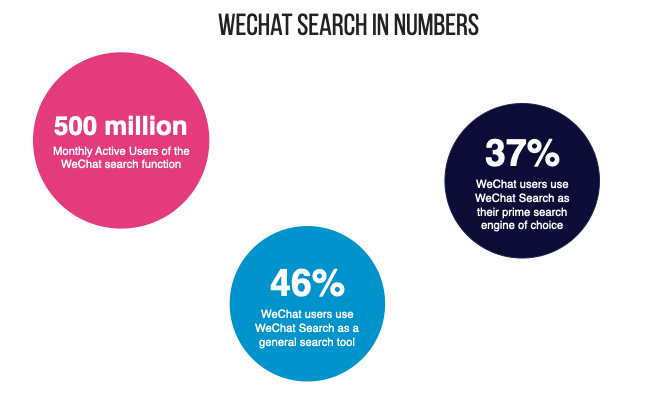
At the moment, its market share is relatively low but with more than 500 million Daily Active Users and Tencent confirming earlier this year at WeChat (Weixin) Class PRO that Seach will be one of the priorities in 2022, we can only expect it will grow considerably in the near future. 

SEO in China

People in China will Baidu your brand rather than Google it. Therefore, understanding how Baidu SEO functions is crucial. The main distinctions between the SERPs of Baidu and Google are:

  • the interface is available only in Simplified Chinese. No other languages support.
  • Links clicked on the SERP open in a new window, keeping the Baidu window always open for users to come back to it.
  • Image-based related searches are present for almost every single search on the right side.
  • Oftentimes, it is tough to distinguish between organic and paid results
  • Google’s mobile search shares the same URL as its desktop version. Baidu uses m.baidu.com for its mobile search engine.
  • Google uses structured data from schema.org markup and crawled data for rich snippets, while Baidu provides its own platform (Baidu Open or Baidu Webmaster Tools) for submitting structured data.
  • If your site is not mobile-friendly, Baidu might transcode it to make it load faster for mobile devices.

Google vs Baidu’s algorithms

When it comes to algorithms, Google and Baidu’s algorithms are similar in theory, but in practice, Baidu still needs to update its game. Though they are almost similar, they have differences too. Some common differences between Google and Baidu algorithms are

  • The algorithm used by Baidu has a significant explicit bias in favor of everything Chinese.
  • In terms of Chinese natural language processing, Baidu has a significant edge over Google and typically returns more accurate results for Chinese queries than any other search engine.
  • Duplicate content is much less tolerated on Baidu. It may take a long time to regain lost rankings if a website receives a Baidu penalty for duplicate content. 
  • It’s better to avoid JavaScript and AJAX content if one wants to rank highly in Baidu because the search engine has trouble crawling it.
  • Baidu spider typically crawlers Chinese websites much more frequently than those by Google.
  • Backlinks from Chinese-based websites are worth much more to Baidu than those from foreign websites.
  • In terms of machine learning for image processing, Baidu still lags. Therefore, for an image to rank well in Baidu’s image results, the alt text and surrounding plain text content must be properly optimized.
  • Baidu prefers websites with frequently updated content. It affects particularly new websites.
  • Compared to Google, Baidu gives a domain age more importance. To rank highly for a new site is harder, but it gets much simpler over time.
  • Baidu uses meta keywords as a ranking signal.


What is ICP? Why do you need it?

The Chinese government maintains strict control over the internet. Consequently, obtaining an ICP (Internet Content Publishing License) in China might enhance Baidu’s SEO performance.

A legitimate Chinese hosting company can only host your website on their servers if they have an ICP license. The best way to stay in the competition and stand out is to have a website in China or at the very least use a test to see if your website is blocked due to the Great Firewall in China and an increasing number of blocked foreign websites.

Compared to websites without an ICP license, obtaining one means much faster loading times for internet users. Internet users in China are therefore more likely to discover websites with an ICP license and to visit those sites again. Possessing an ICP license enhances Baidu SEO results. The ICP license, however, is restricted to businesses with Chinese registrations. Even though Baidu will not block websites for not having an ICP license, having one is not absolutely necessary for Baidu SEO. Paid media on Baidu it’s another story.

Conclusion

Although Baidu is the most popular search engine in China, it does not have market dominance. Users can use a wide range of additional resources, as we have already discussed in this article.

It is essential to familiarize yourself with the different search engines before creating a strategy for the Chinese market in order to ascertain which search engines resonate with your audience and how to use them to gain the most exposure.

If you wish to know more about Chinese search engines and SEO strategies or other marketing techniques in China, please contact our team. We use our knowledge and expertise to help businesses build meaningful partnerships and develop their networks among Chinese customers. For additional information, please contact us at contact@thewechatagency.com.