From SEO to GEO: Why Brands Are Optimizing for AI

As artificial intelligence tools become part of daily digital life, one clear trend is emerging in China’s digital marketing landscape: the shift from SEO (search engine optimization) to GEO (generative engine optimization).

This pivot comes as AI chatbots increasingly influence how users discover brands, products, and services. Instead of searching on Baidu or Google, users now ask AI tools directly—and AI recommendations are shaping consumer decisions in real time.

What is GEO?

GEO, or generative engine optimization, refers to the practice of crafting digital content that is more likely to be selected and quoted by AI chatbots in their responses. Rather than simply optimizing for keywords and backlinks, GEO content is structured for AI understanding, credibility, and context.

This means:

  • Including data-backed insights

  • Referencing real-world use cases

  • Clearly explaining product categories or market positioning

  • Publishing on trusted third-party platforms, not just official brand channels

Why This Matters for Brand Visibility

When AI assistants make product or service recommendations, they are perceived as neutral and authoritative. If a chatbot suggests a brand, it’s often taken as a soft endorsement—especially if the user screenshots the result and shares it on social media platforms like Xiaohongshu.

With AI-powered discovery gaining traction, brands not showing up in these responses risk losing organic visibility to more AI-optimized competitors.

AI Changes the Content Game

In the traditional model, content was created for people and optimized for search engine crawlers. Today, it’s increasingly about content for AI first—ensuring that generative models can interpret and trust the material.

Unlike search engines that often highlight official brand sites, AI bots pull from a wider mix of sources, including:

  • Blogs

  • Wikis or knowledge bases

  • Mapping and directory services

  • Social content or review-based platforms

What Makes Content AI-Friendly?

Marketers are beginning to adapt to this shift. GEO-friendly content usually follows a few best practices:

  • Informative and structured: Avoid fluffy marketing language; instead, offer factual descriptions and practical value.

  • Published externally: Content hosted on third-party platforms is more likely to be cited.

  • Localized for Chinese AI platforms: Content in Simplified Chinese, hosted in China, or on locally recognized domains has greater traction.

  • Rich in context: Clarify the industry, use case, and value proposition in detail.

Why Brands Are Making the Switch

Traffic from traditional search engines is steadily declining. Platforms like Douyin, Xiaohongshu, and WeChat Channels have captured consumer attention, and now AI chat tools are taking it a step further, acting as personalized content curators.

Some companies are even rethinking their entire marketing stack after seeing competitors showcased in AI responses. This has prompted a new wave of investment into content strategies focused on AI discoverability rather than keyword density alone.

SEO Isn’t Dead—But It’s Not Enough

To be clear, search engines still play a role. For example, half of one major Chinese search engine’s quarterly revenue still comes from online marketing. But user behavior is shifting fast, and marketing teams are seeing up to five times more demand for GEO services than SEO in certain sectors.

Forward-thinking brands are already working on:

  • Updating blog formats to include structured takeaways

  • Creating educational resources that feel “AI quotable”

  • Publishing to content hubs beyond their own sites

Final Thoughts

As AI becomes a trusted advisor in consumer decision-making, brands must move beyond old SEO rules and think AI-first.

GEO isn’t just a buzzword—it’s a new way of ensuring your brand gets discovered, cited, and trusted in the age of generative AI.

Need Help with GEO in China?
Our team can help you transform your content strategy for the AI era—across blogs, product pages, and third-party platforms. Contact us to get started.

RED Alert: How Brands Can Win On RedNote in Southeast Asia

As Xiaohongshu (also known as RED or RedNote) rides a global wave of attention, savvy marketers in Southeast Asia are beginning to take notice—especially in Malaysia and Singapore, where Chinese-speaking communities and Gen Z digital behavior have laid fertile ground for RED’s rise.

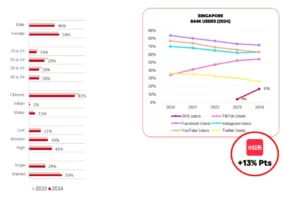
The 2025 migration of TikTok users—dubbed “TikTok refugees”—has fueled fresh interest in the platform, helping RED gain traction across international markets. But in Malaysia and Singapore specifically, this interest is translating into 4.3 million users and growing daily.

So, what’s driving Xiaohongshu’s success in the region—and how can brands seize this opportunity?

Why RED Is Gaining Traction in Southeast Asia

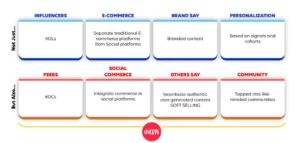
Unlike other social platforms where aesthetics and advertising dominate, RED has carved a niche with authentic, UGC-driven long-form content. Its recommendation engine favors user-generated reviews, everyday tips, and real-life experiences over polished brand pushes—making it feel more like a trusted community than a billboard.

What sets RED apart:

  • UGC algorithm that prioritizes authenticity
  • Interest-based communities for like-minded users
  • Less polished, “real” content that resonates with young urban audiences

In both Malaysia and Singapore, this approach aligns well with user preferences for credibility, relatability, and peer-driven inspiration.

Who’s Using RED in Malaysia and Singapore?

📍 Malaysia

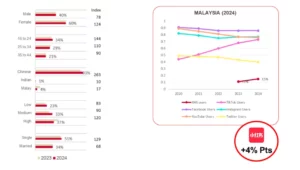
  • User Growth: 4% YoY
  • Demographics: 63% aged 16–34, predominantly Chinese and single
  • Traits: Brand lovers, fame followers, private networkers
  • Behavior: Follow trends, stay anonymous, seek genuine product insights

📍 Singapore

  • User Growth: 13% YoY
  • Demographics: 42% aged 16–34, 36% aged 35–54; majority Chinese with growing Malay users
  • Traits: Affluent shoppers, community participants, brand enthusiasts
  • Behavior: Value exclusivity, seek peer recommendations, lean into lifestyle

Despite being smaller than platforms like Instagram or TikTok, RED boasts high “daily stickiness”—meaning users return frequently, stay longer, and engage deeper.

Top Categories Thriving on RED

If your brand plays in any of the following categories, you should already be testing on RED:

High-performing categories:

  • Beauty & personal care
  • Fashion
  • Travel & tech

Surprisingly strong categories:

  • Indulgence items: Snacks, ice cream, alcohol
  • Experiential offers: Spa packages, concert tickets, weekend getaways

These segments see outsized engagement on RED thanks to its word-of-mouth ecosystem, where users don’t just browse—they search, share, and buy.

Why Some Brands Still Hesitate

Despite its growing popularity, some brands remain hesitant about RED. Two main challenges arise:

1. Language barrier

The app is still heavily Chinese-dominated, which may alienate non-Chinese speakers, especially in Malaysia.

2. Smaller user base

While RED has 4.3M users in Malaysia and Singapore, it’s still modest compared to larger platforms.

However, with double-digit daily stickiness and deeply engaged niche communities, RED may offer better ROI per user—especially for categories that benefit from peer-driven recommendations.

How Brands Can Win on RED: The 5C Framework

To help brands approach RED with the right mindset, here’s a 5C framework tailored for Southeast Asia:

1. Channel Fit

Is RED the right platform to achieve your goals? RED works best for community-led discovery and product consideration, not mass awareness.

2. Credibility First

RED thrives on peer-to-peer validation. Partner with KOCs (Key Opinion Consumers) instead of high-profile influencers. Their relatable content earns more trust.

3. Content Realness

Avoid polished, overly branded visuals. Go for raw, everyday content that feels natural. Think product reviews, behind-the-scenes, and day-in-the-life storytelling.

4. Community Engagement

Create or join niche communities. Use hashtags, UGC contests, and local incentives to fuel participation and build brand tribes.

5. Commerce Integration

Link content to your brand store or landing pages. RED users are highly conversion-driven and expect direct access to purchase options.

Best Practices for Getting Started

Here’s how to integrate RED into your broader social media strategy:

1. Audit your audience-fit

Is your target audience already searching for your category on RED?

2. Localize the content

Test campaigns specifically for Chinese-speaking segments or Malays in Singapore, where user bases are growing.

3. Build a RED-specific strategy

Don’t just cross-post. Develop unique campaigns with tailored UGC, hashtags, and influencer partnerships.

4. Focus on organic first

RED isn’t a place for hard-selling. Earn trust through authentic storytelling and then guide users to purchase.

5. Drive to brand space

Ensure your RED content links to your brand page or store to capture interest and complete the journey.

Final Thoughts

Xiaohongshu’s growth in Malaysia and Singapore is a signal that consumer discovery behavior is changing. As trust, community, and authenticity become key drivers of influence, RED offers a powerful complement to your mainstream platforms.

With 4.3 million engaged users and growing stickiness, RED isn’t just a trend—it’s a rising social commerce channel that can give early movers a lasting competitive edge.

Looking to build your RED strategy for Southeast Asia? Our team can help with KOC outreach, community content, and localized campaigns tailored to RED’s ecosystem. Let’s talk.

Baidu vs Google: 8 Key SEO Differences You Must Know

When it comes to search engine optimization, most global marketers are well-versed in Google’s algorithm and best practices. But if you’re targeting the Chinese market, Baidu—the country’s leading search engine—requires a different approach altogether.

In this article, we break down 8 critical differences between Baidu and Google SEO to help you build a localized strategy that actually works.

1. Algorithm Structure: Keywords Still Matter on Baidu

While Google has moved away from meta keyword tags and flat structures, Baidu still uses them as ranking signals. Flat website architecture, accurate meta tags, and keyword density remain important for Baidu rankings. Brands entering China should revisit some “old-school” SEO tactics to align with local requirements.

2. ICP License: A Must for Serious Rankings

An ICP (Internet Content Provider) license is a major trust and compliance signal for Baidu. It’s issued by the Chinese government and is required for hosting a website in Mainland China. Without it, your visibility will be limited—even if your content is well-optimized. Most foreign brands work through a local partner to obtain this license or opt for a .cn domain hosted via a Chinese CDN.

3. Ad Platform Limitations: More Friction Than Google

Launching Baidu ads comes with more barriers than Google Ads. You’ll need to provide additional documentation, undergo account verification, and adapt to fewer ad format options. Campaign approval also tends to take longer. If you plan to invest in SEM, budget extra time for setup and approvals.

4. Different Payment Models: Upfront vs. Post-Billing

Unlike Google, which allows post-campaign billing and flexible budgets, Baidu operates on a prepaid model. Brands must pay an initial deposit and verification fee to activate their ad account. There’s also a minimum threshold for ad spend. If you’re entering the market for the first time, plan for this upfront investment.

5. Chinese Content is King

Baidu strongly favors Simplified Chinese content. Sites written in other languages—even Traditional Chinese—will rank lower. In addition to language, local hosting or Chinese CDN support improves page speed and indexing. Simply put: the more localized your content and infrastructure, the better your results.

6. Social SEO: Zhihu, Douban & Tieba Matter

Unlike Google, Baidu’s ecosystem incorporates results from Chinese forums and social platforms. Activity and keyword-rich discussions on Zhihu, Douban, and Baidu Tieba directly influence rankings. This means a hybrid content strategy—blending on-site SEO and off-site social content—is critical for success.

7. Mobile Optimization: Non-Negotiable

With over 65% of users accessing Baidu via mobile, speed and responsiveness are essential. Baidu prefers fast-loading AMP-like mobile pages and rewards sites that are optimized for China’s top mobile devices and browsers. Don’t expect your desktop-optimized Western site to perform well in this environment.

8. Local Backlinks Carry More Weight

Backlinks still play a big role in Baidu SEO—but with a twist. Baidu gives higher weight to inbound links from Chinese domains and strongly favors exact-match anchor text. Building a local backlink network via media outreach, directory submissions, and Chinese forums can significantly boost your search visibility.

Final Thoughts

A high-performing SEO strategy in China isn’t a simple translation of your Google playbook. It requires localization, compliance, and a firm grasp of Baidu’s ranking factors. By understanding and adapting to these key differences, your brand can gain meaningful visibility and connect with Chinese consumers in a truly relevant way.

Need Help Navigating Baidu SEO? Our team specializes in building effective search and content strategies for the China market. Get in touch to explore how we can support your next campaign.

6 Emerging Consumer Segments Reshaping China’s Digital Market

As China’s digital economy continues to evolve, so do the expectations, behaviors, and preferences of its consumers. From tech-savvy seniors to Gen Z trendsetters, a nuanced understanding of the country’s most prominent consumer groups is crucial for any brand looking to succeed in this market.

In this blog, we spotlight six key Chinese consumer profiles worth watching in 2025 and share practical tips for how brands can connect with them through localized, data-driven strategies.

  1. Elderly Consumers: China’s Silver Tech Boom

With over 280 million internet users aged 60 and above, China’s senior segment now makes up more than 10% of the nation’s online population. These older users are increasingly comfortable with digital tools and are rapidly expanding their online spending. JD.com has reported a staggering 238% increase in purchases made by seniors since 2019.

What They Spend On:
  • Travel and leisure
  • Health supplements and wellness services
  • Comfortable lifestyle products
How to Engage Them:
  • Simplify UX design for mobile apps and websites
  • Focus on credibility, safety, and product quality
  • Leverage family-centric storytelling and value-driven campaigns
  1. Gen Z: Experience Over Possession

China’s Gen Z shoppers, born between 1995 and 2010, are digital natives who value emotional connections, creativity, and instant gratification. According to recent studies, 47% of Gen Zers in China say they shop on impulse, often influenced by social trends and peer recommendations.

What They Spend On:
  • Fashion and beauty
  • Niche hobbies and pop culture merchandise
  • Experiential consumption: concerts, travel, co-branded items
How to Engage Them:
  • Use Xiaohongshu, Douyin, and Bilibili for trend-based content
  • Build buzz through KOL campaigns and interest-based communities
  • Prioritize UGC, livestreams, and viral challenges
  1. Family Travel Planners: Smart Spending, Digital Tools

From parents organizing summer vacations to adult children planning trips for elderly relatives, family travel planners are strategic, digital-first consumers. They rely heavily on online travel agencies (OTAs) like Trip.com (Ctrip), Qunar, and Fliggy.

What They Spend On:
  • Group travel packages and multi-generational experiences
  • Convenience-oriented services like airport transfers and visa processing
  • Family-focused hotels and entertainment
How to Engage Them:
  • Use WeChat Mini Programs for itinerary customization
  • Work with travel influencers to share itineraries
  • Create bundled experiences and early-bird booking discounts
  1. Brand-Conscious Millennials: Value-Driven Consumers

No longer chasing luxury logos, Chinese millennials (aged 28–40) prioritize value, quality, and alignment with their personal identity. With many living in dual-income households, this group commands high purchasing power.

What They Spend On:
  • Wellness and fitness
  • Premium but functional fashion
  • Modern home goods and technology
How to Engage Them:
  • Showcase sustainability, authenticity, and innovation
  • Use storytelling and brand purpose to foster loyalty
  • Offer product reviews and rich content to support informed decisions
  1. High-Income Baby Boomers: Wellness and World Travel

This segment, often retired professionals and entrepreneurs, has significant disposable income and time to spend. Whether it’s international trips or wellness investments, they’re looking to enjoy life’s second act to the fullest.

What They Spend On:
  • Global luxury travel
  • Health checks and spa treatments
  • Educational and cultural experiences
How to Engage Them:
  • Highlight exclusivity and comfort
  • Use direct-response campaigns with trusted media partners
  • Provide concierge-level service and personalized offerings
  1. Affluent Female Shoppers: Driving the “She Economy”

Women in Tier 1 and 2 cities now dominate household spending decisions. Educated, career-oriented, and financially independent, they prioritize self-investment and high-end lifestyle choices.

What They Spend On:
  • Designer fashion and beauty products
  • Luxury travel and fine dining
  • Pet care, wellness, and fitness subscriptions
How to Engage Them:
  • Curate premium content and product lines
  • Offer VIP programs and early access exclusives
  • Celebrate empowerment and self-expression in campaigns

Final Thoughts

Understanding China’s evolving consumer landscape isn’t just about identifying who’s spending – it’s about understanding why they spend, what motivates them, and where they engage. These six audience segments are leading the shift in China’s digital ecosystem. Tailoring your content, messaging, and media strategy to resonate with them can unlock long-term growth and brand loyalty.

Need help localizing your brand for China? Our team specializes in cross-platform strategy, social commerce activation, and KOL-driven campaigns. Get in touch to learn more.

From AI to O2O: 7 Key Media Trends in China

As the digital media ecosystem in China continues to evolve at an unprecedented pace, understanding emerging trends is crucial for brands looking to thrive in this competitive market. Starcom, the media arm of Publicis Groupe, recently released its latest report, “Increased Integration and Depth in China Media Market”, identifying seven pivotal trends that are redefining consumer behavior, content distribution, and brand strategy across platforms. Here’s a breakdown of the most important insights and how brands can prepare.


1. Cross-Platform Integration: Breaking the Walls Down

China’s once siloed internet ecosystem is transforming into a landscape of collaboration. In 2025, we’re witnessing platforms like Tencent and Alibaba opening up to one another: Tencent Games content appears on Douyin, Taobao accepts WeChat Pay, and JD.com integrates Alipay.

For brands, this “horizontal integration” means smoother customer journeys and opportunities to execute truly omnichannel strategies. Cross-platform compatibility also improves user experience, leading to better engagement and conversion rates.


2. AI-Powered Search and Intelligent Interactions

Search is no longer just about users looking for information. With generative AI entering the scene, proactive content delivery and conversational search are reshaping digital marketing. The search engine market in China is expected to surpass RMB 300 billion by 2029, with mobile-based search playing a major role.

Brands must rethink their search marketing by aligning keywords, content, and SEO strategy with evolving AI-driven behaviors across Baidu, Douyin, Xiaohongshu, and other platforms.


3. Online and Offline Synergy: The New O2O Loop

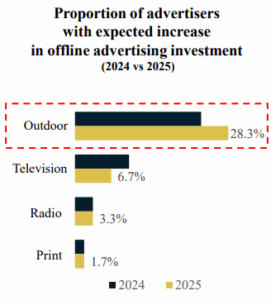
Marketers are rediscovering the power of offline media, especially when amplified by digital interactivity. In 2025, 28.3% of advertisers are increasing their offline ad spend. Campaigns like Xiaohongshu’s user-generated content (UGC) billboards and McDonald’s programmatic subway ads show how to turn physical placements into interactive, trackable experiences.

Successful brands are integrating data capture tools, experience design, and social buzz triggers into their O2O campaigns to drive conversion.

4. Social-Powered Closed-Loop Commerce

Social media platforms are becoming e-commerce ecosystems. Xiaohongshu leads the way with interest-based group chats, offering exclusive promotions, live previews, and direct links to virtual stores. The results are impressive: 2.5x higher repurchase rates and 300x better conversion rates in private domains.

Brands must build community-focused strategies and activate users through content that fuels interaction and loyalty.


5. Value-Driven E-Commerce Over Price Wars

As consumer preferences shift from discounts to experience, platforms like Taobao and JD.com are focusing on enhancing logistics, customer service, and product quality. Features like Taobao’s hourly purchase service and JD.com’s “24-hour delivery in counties and towns” reflect this evolution.

To remain competitive, brands should deliver value through exclusive products, flexible services, and premium experiences instead of relying solely on low prices.


6. Diverse Content Channels: From Podcasts to Micro-Dramas

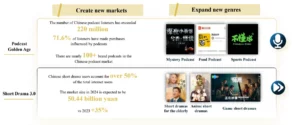
China’s content landscape is rapidly diversifying. Podcasts now reach over 220 million users, with 71.6% influenced to make purchases. Meanwhile, micro-drama users account for more than half of the internet population, with the market expected to grow 35% year-on-year to reach RMB 50.44 billion.

Brands need to leverage these formats to tell compelling stories, connect with niche audiences, and reinforce product relevance in immersive, culturally attuned ways.

7. AI’s Expanding Role Across the Funnel

AI is no longer a backend tool; it’s front and center. From predictive CRM and personalized content generation to dynamic bidding and campaign automation, AI is transforming the entire marketing stack. China is also exploring frontier technologies like brain-computer interface advertising.

Brands must embrace AI to improve media planning, content production, customer segmentation, and real-time campaign optimization.


Conclusion: Be Adaptive, Be Integrated, Be Smart

In today’s media landscape, success is no longer about mastering one channel or trend. It’s about understanding how technology, platforms, and content work together to shape consumer expectations.

By staying ahead of these seven trends, brands can craft adaptive, AI-enhanced, and experience-driven strategies that resonate in the ever-shifting Chinese digital ecosystem.

Need help navigating China’s evolving media landscape? Contact our team to explore how we can localize your strategy, enhance your platform presence, and drive smarter, performance-driven campaigns tailored to the China market.

AI Tools, Smarter Discounts & Winning Plays: 618 Strategies for Beauty Brands

The 2025 618 Shopping Festival has revealed not just the strength of China’s e-commerce, but a strategic shift powered by AI, refined platform tactics, and tighter content-commerce integration—especially for the beauty sector.

AI Takes Center Stage

AI quietly became the engine of this year’s festival. Platforms like Taobao and Tmall deployed advanced tools such as Quanzhantui, which assisted 1.4 million merchants in campaign performance optimization. Their new “Image-to-Video” feature alone generated over 1.5 million videos in the run-up to 618, allowing beauty brands to scale production with unmatched speed and consistency.

In May, over 100 million pieces of AI-generated content were created by Alibaba platforms, helping brands reduce costs and maintain high engagement velocity.

Rule Changes and Real Impact

This year, Taobao and Tmall simplified their promotional mechanisms by eliminating complicated cross-store discounting. Instead, a universal 15% discount and category-specific vouchers created greater transparency and increased conversion rates.

The simplified pricing approach also helped:

  • Increase basket size
  • Lower cart abandonment
  • Improve campaign forecasting and marketing ROI

Still, users could stack up to 4+ coupons, leading to ongoing complexity and risks of exploitation via returns.

Return of International Beauty Brands

International giants reclaimed dominance during 618:

  • L’Oréal, Estée Lauder, Lancôme, and SkinCeuticals surpassed 100M RMB in sales within 30 minutes.
  • Local brand Proya was the only domestic contender in the same range.

Why? Cleaner inventories, global price-matching, exclusive discounts, and better member engagement strategies re-energized consumer trust.

Platform Differentiation Defines Strategy

Each platform reinforced its unique edge:

  • Tmall/Taobao remain brand-building powerhouses (45.1% market share, +8.5% YoY growth).
  • JD.com leaned into sustainable luxury with its “Green Impact Initiative.”
  • Douyin capitalized on algorithmic DTC performance.
  • Xiaohongshu (RedNote) emerged as the go-to discovery engine for functional skincare.

Content-Commerce Convergence

Cross-platform integrations like Tmall × Xiaohongshu’s “Red Cat Plan” created seamless discovery-to-checkout flows. Brands embedding Tmall links into RED posts saw a 27% lift in click-through-to-conversion.

Livestreaming’s Evolving Role

While year-round livestreaming is now common, 618 remains a high-intensity branding moment. Brands leverage the event for:

  • Launching new SKUs
  • Testing pricing elasticity
  • Generating strategic insights ahead of Double 11

Premium brands are more cautious with discounts, using livestreams strategically rather than constantly.

What This Means for Beauty Brands

618 is no longer just a discount-driven spike—it’s a mid-year strategy checkpoint. Success now depends on a refined mix of:

  • AI-powered content production
  • Platform-specific strategies
  • Transparent promotions
  • Commerce embedded in community

Want to future-proof your brand’s 618 strategy or improve your China e-commerce game with AI and integrated platform tactics? Contact us today to craft a data-backed, conversion-focused strategy tailored to your needs.

Beyond WeChat: Top Chinese Social Media Platforms for Effective B2B Marketing

When discussing B2B marketing in China, WeChat is often the first platform that comes to mind—and for good reason. But to truly maximize your impact in the Chinese B2B market, a broader omni-channel approach is necessary. Several other Chinese social media platforms—like Weibo, Zhihu, and Maimai—offer powerful opportunities to connect with industry professionals, position your brand as a thought leader, and find new business leads.

Here’s how to leverage these platforms in your B2B strategy:

1. Weibo: Build Awareness and Monitor Industry Trends

Weibo is one of China’s largest microblogging platforms, offering real-time engagement and trend discovery. For foreign B2B brands entering the market, Weibo serves as a gateway to build brand awareness and join industry conversations.

Key Benefits:

  • Use hashtags to follow relevant conversations and competitors
  • Publish thought leadership content and company updates
  • Discover local partners and events by tracking trending keywords

Best Use Case:

Early-stage market entry, brand visibility, and competitor monitoring.

2. Zhihu: Establish Thought Leadership

Zhihu, China’s leading Q&A platform, is widely used by professionals seeking credible, in-depth knowledge. With its highly educated and engaged user base, Zhihu is ideal for demonstrating expertise and winning trust.

Key Benefits:

  • Answer industry-related questions to position your brand as a trusted expert
  • Publish long-form articles, whitepapers, and case studies
  • Build brand authority over time with consistent, high-quality engagement

Best Use Case:

Mid-funnel content strategy and thought leadership for vertical industries (e.g., SaaS, tech, manufacturing).

3. Maimai: Tap into China’s B2B Professional Network

Maimai is often referred to as China’s LinkedIn. It connects verified professionals and businesses, making it an ideal platform for lead generation, recruitment, and corporate branding in the B2B space.

Key Benefits:

  • Reach decision-makers directly through Maimai’s professional network
  • Run employer branding campaigns to attract talent and partners
  • Participate in B2B forums to grow visibility in your niche

Best Use Case:

Corporate relationship building, talent acquisition, and high-level B2B engagement.

Final Thoughts: Adopt an Omni-Channel Strategy for B2B Success

While WeChat remains the cornerstone of B2B digital marketing in China, platforms like Weibo, Zhihu, and Maimai offer complementary benefits that support brand visibility, industry credibility, and lead generation.

By integrating these platforms into your marketing strategy, you can:

  • Diversify touchpoints with target audiences
  • Build trust through content and dialogue
  • Stay agile in a dynamic digital ecosystem

Need help creating a China-ready B2B marketing plan?

Contact us today to develop a multi-platform strategy tailored to your business goals.

The Ultimate Guide to WeChat Search

WeChat has long been the cornerstone of digital engagement in China. With over 1.3 billion monthly active users, it’s more than a messaging app—it’s an ecosystem. One of its most powerful yet underutilized features is WeChat Search (搜一搜). As search behavior continues shifting from external engines like Baidu to in-app exploration, understanding how WeChat Search works is key for brand visibility in China.

What Is WeChat Search?

WeChat Search is Tencent’s internal search engine that enables users to discover content within the WeChat ecosystem. Think of it as China’s version of Google—but exclusively for content inside WeChat.

Users can type queries in the “搜一搜” search bar and receive results across:

  • Official accounts
  • Mini programs
  • WeChat Channels (视频号)
  • Articles
  • Moments
  • eCommerce
  • Brand zones
  • FAQs, encyclopedias, and more

WeChat Search delivers algorithm-curated, personalized results based on a mix of relevance, recency, and user intent.

Why It Matters More in 2025

Chinese users now search directly in WeChat for information, products, and services instead of opening Baidu. This internal behavior gives brands new opportunities to:

  • Bypass high SEM costs on Baidu
  • Build a self-contained, low-cost ecosystem
  • Gain organic exposure without ads

As of 2025, WeChat Search handles billions of monthly queries, especially across lifestyle, healthcare, e-commerce, and B2B queries.

Core Features of WeChat Search

1. Unified Search Index

WeChat aggregates results from:

  • Official accounts (公众号)
  • WeChat Channels (视频号)
  • Mini Programs (小程序)
  • Branded pages
  • News and encyclopedia (like Sogou Baike)

Results are customized by user behavior and platform activity, making organic content optimization essential.

2. Smart Search Results by Theme

WeChat Search organizes results into categories:

  • Brand or Product
  • Content (Articles, Channels, FAQs)
  • Services (Booking, Payments)
  • eCommerce (Mini Programs, group buys)
  • People (KOLs, brand representatives)

If users search “Nike,” for example, they’ll see Nike’s official account, mini-program, content, and videos—all in one place.

Ranking Factors in WeChat Search

The algorithm considers:

  • Account authority: Verified status and historical content quality
  • Engagement: Shares, likes, reads, saves
  • Content relevance: Keyword density, tags, and search history
  • Consistency: Frequency of posting and user interaction
  • Data from mini-program and Channels: Search presence now includes video, store reviews, eCommerce activity, and more

How to Optimize for WeChat Search

1. Create Consistent, Keyword-Rich Content

  • Use high-traffic terms in article titles and headers
  • Include relevant hashtags
  • Mirror trending search terms

Pro tip: Tools like Sogou Index and WeChat Index help identify trending queries in your industry.

2. Leverage Mini Programs and Channels

  • Tag your mini programs with keywords
  • Include search-optimized landing pages inside programs
  • Use Channels with SEO-friendly captions and hashtags

3. Set Up a Branded Search Zone

Brand Zones consolidate a brand’s:

  • Official Account
  • Mini Program
  • Channels content
  • Customer service tools

These zones appear as the top result when users search your brand, giving a Google-like knowledge panel inside WeChat.

4. Invest in WeChat Search Ads

For highly competitive keywords, paid placements appear atop organic results. These are keyword-based and can be targeted by:

  • Region
  • Gender
  • Interest
  • Device

Search ads drive traffic directly to articles, stores, or brand zones.

Final Thoughts: Why You Can’t Ignore WeChat Search

In a content-saturated China market, WeChat Search is now the home page of brand discovery. For both B2C and B2B marketers, it’s a critical SEO channel often missed in traditional planning.

Unlike Baidu, you’re not competing with the entire internet—only with other brands inside the app. With lower barriers to entry and stronger user intent, brands that invest early in WeChat Search optimization gain the upper hand.

Whether you’re launching in China or want to improve organic traffic and conversions, we can help. Let’s build a search-ready WeChat ecosystem that connects, converts, and sustains. Contact us to start planning your 2025 WeChat SEO strategy.

JOB OPENING | Social Media Manager

We’re hiring! KRDS is on the lookout for a Social Media Manager to drive our clients’ digital presence in China through AI-powered strategies and cutting-edge creative execution.

📍 Location: Shanghai
💼 Work Style: Hybrid (Remote-friendly)

🔍 About the Role

As our new Social Media Manager, you’ll blend China’s unique digital ecosystem with powerful tools like Xiumi, Jianying (CapCut China), and AI platforms to craft campaigns across WeChat, Xiaohongshu, and Douyin.

Our clients include world-renowned names like Grand Hyatt, Galeries Lafayette, Cartier, and B2B giants such as BNP Paribas and GIC (Singapore Sovereign Fund).

🧩 Key Responsibilities

1. China Social Strategy 🇨🇳

  • Collaborate with Digital Strategists & Account Managers to build platform-native strategies based on WeChat’s search algorithm, Xiaohongshu trends, and Douyin’s AI recommendations.

  • Leverage AI content tools like:

    • Jianying’s auto-captioning

    • Qingting’s voice cloning

    • Baidu Wenxin for ideation

  • Conduct competitor tear-downs using Chinese analytics platforms like New Rank and TooBigData to spot white space opportunities.

2. AI-Enhanced Creative Production 🤖🎨

  • Design scroll-stopping visuals:

    • Xiumi for article layouts on WeChat

    • Canva China (可画) for templated graphics

    • Jianying (CapCut) for video editing

    • Meitu for photo enhancement

  • Generate high-performance copy with:

    • Baidu Wenxin for Mandarin SEO

✅ Qualifications

Must-Haves:

  • 3+ years managing China social accounts with strong KPI results

  • Xiumi-designed WeChat articles & Jianying-edited video samples

  • Daily use of at least 3 Chinese AI or design tools

🔥 Bonus Points:

  • Certification from Tencent/Huatuo’s marketing AI courses

  • Experience with Tencent Ads (腾讯广告) and Xiaohongshu Ads (小红书广告)

📝 Apply With:

  1. Your resume

  2. Your Xiumi portfolio (or 3 WeChat articles)

  3. A 60-second Jianying-edited video pitch (in Mandarin) titled:
    “How AI Is Transforming China Social”

🎁 Why Join KRDS?

  • Hybrid/Remote Work

  • Flexible Hours & Work-Life Balance ⚖️

  • Annual Trips ✈️

  • Free Digital Marketing Courses 🎓

  • Performance-Based Rewards

  • Collaborative & Fast-Growing Environment 🌱

🧧 ¥5,000 Referral Bonus!

Know someone perfect for the role? Refer them and earn ¥5,000 if we hire them! 💸

📩 Apply now or contact us at: recruitment@krds.com

9 Proven Strategies for Foreign Brands to Succeed on RedNote

RedNote (Xiaohongshu) has become a crucial platform for lifestyle-focused social commerce in China. With a strong base of Gen Z and millennial users, RedNote offers foreign brands a powerful entry point—if content is executed well.

Examples of Galeries Lafayette’s official RedNote (Xiaohongshu) account content, including branded posts, influencer videos, product promotions, and CNY marketing campaigns

Here are 9 proven strategies that help brands stand out, gain traction, and convert consumers on RedNote.

1. Choosing the Right Visual Elements

High-quality visuals are essential to gain attention on RedNote, especially on a platform rooted in shopping discovery. Authentic product photos—especially those that look like they’re taken by users—outperform overly commercial images.

Your cover image heavily influences click-through rates, and user-generated-style visuals tend to generate better engagement and higher conversions.

2. Localize Your Content

Translation alone won’t help your brand stand out. With over 56% of brands on RedNote being local, cultural alignment is key.

Foreign brands need to adapt messaging and visuals to Chinese tastes, participate in local events, and ensure language is in simplified Chinese with relevant slang and expressions. Professional translation is highly recommended over free tools.

3. Implement a Solid Influencer Marketing Strategy

Influencers remain central to social commerce in China. However, the shift is moving toward KOCs (Key Opinion Consumers) and Micro-KOLs, who offer more authentic and relatable content.

Use platforms like:

  • Pugongying – RedNote’s official KOL marketplace
  • Qiangua – A third-party tool offering in-depth analytics and price estimates

These tools help identify the right influencer partnerships based on engagement, niche, and audience fit.

4. Launch a Brand Promotion Through Ads

While organic content drives trust, paid content helps reach niche audiences. RedNote offers formats such as:

  • Paid KOL collaborations
  • In-feed/native ads
  • Search ads (placing your brand in top search results for relevant keywords)

Combining organic and paid tactics is essential for visibility and conversion.

5. Optimize for RedNote’s Social Search Function

RedNote users now skip traditional search engines and look directly within the app for product recommendations.

To appear in these results, your content must be keyword-optimized—using trending search terms in titles, captions, and hashtags. Conduct research on term popularity and search volume within your niche.

6. Long vs. Short Content

Brand accounts generally perform better with longer, keyword-rich content (about 500 characters), while individual influencers might gain engagement with just emojis.

Use a blend of rich descriptions and emojis for better readability and stronger reach through RedNote’s search algorithm.

7. Generate Traffic Through Lucky Draws

RedNote offers a built-in feature for lucky draws, where users follow, like, or bookmark to enter.

These campaigns attract initial attention—even from freebie seekers—but can go viral and lead to brand discovery by more qualified leads. Sephora is one success case, generating 1,000+ engagements with a lucky draw.

8. Utilize RedNote’s Live-streaming Features

Live commerce is rising fast on RedNote. Though platforms like Taobao and Douyin lead the category, RedNote is gaining momentum, particularly in beauty, food, and maternal product categories.

During the Spring Festival, the platform hit 198M RMB in sales via livestreams, with users valuing both interactivity and authenticity in real-time product showcases.

9. Participate in E-Commerce Shopping Festivals

Leverage China’s e-commerce calendar—especially events like:

  • Lunar New Year
  • National Day
  • Women’s Day (key on RedNote due to its largely female base)
  • RED Friday – RedNote’s version of Black Friday, from late November through early December

Participation in these events can significantly boost visibility and sales when paired with strategic promotions.

Final Takeaway

RedNote is more than a content-sharing platform—it’s a full social commerce ecosystem. For foreign brands, understanding and leveraging these 9 strategies is critical to building relevance and success in China’s competitive digital space.

Want to localize your RedNote strategy with confidence? Contact us today to build a plan that drives content, community, and commerce.